Published
The design decisions behind djob
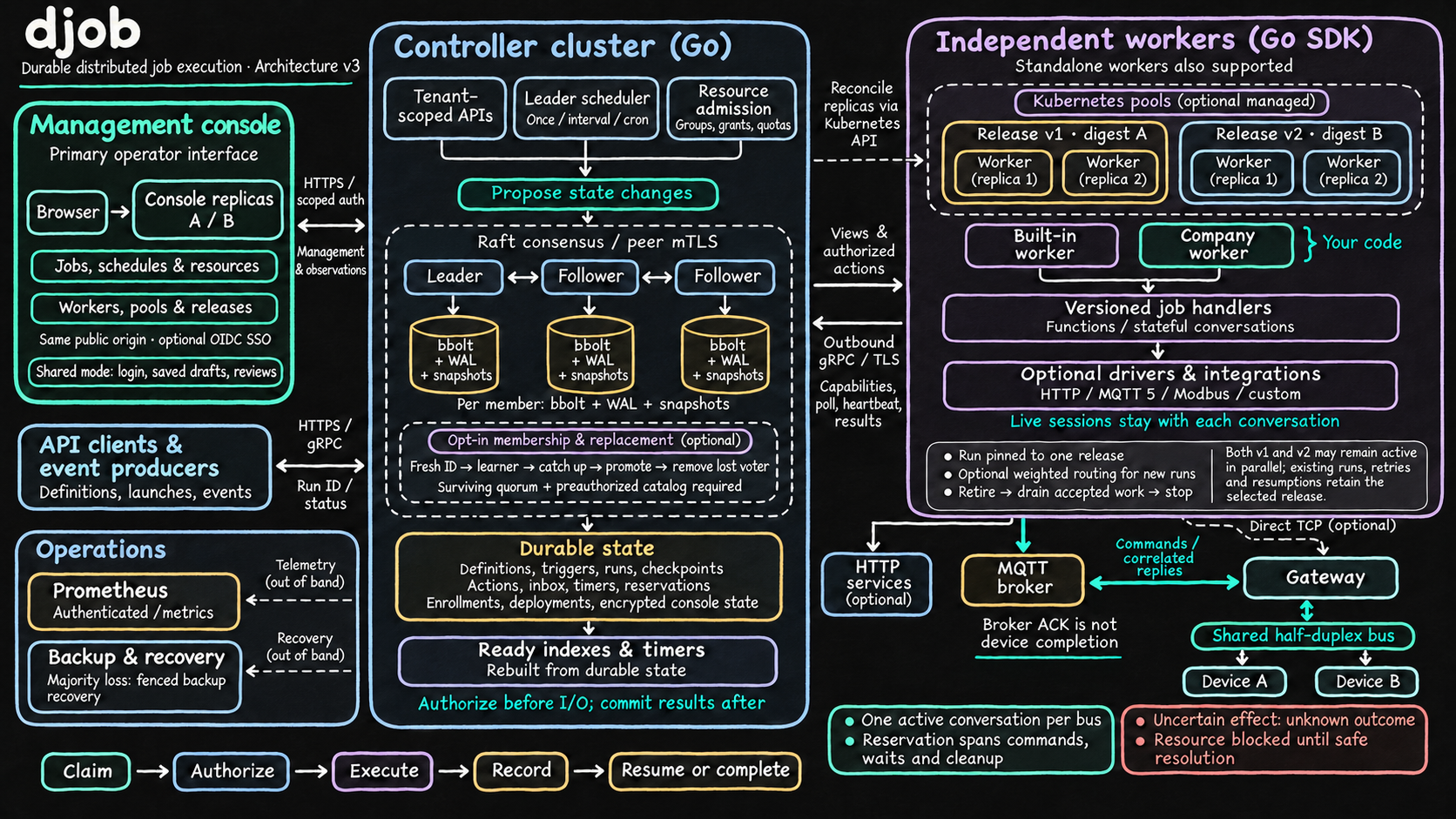
The reasoning behind djob's replicated coordination, independent workers, shared-resource reservations and release selection, with a worked capacity model and explicit recovery costs.
Software, systems, and the tools we think with
I’m Sebastian. I build software and write to understand it. I share these notes to help others work through difficult engineering decisions and make changes with greater confidence.
A little more about me
Published
The reasoning behind djob's replicated coordination, independent workers, shared-resource reservations and release selection, with a worked capacity model and explicit recovery costs.
Published
Comparing Temporal, Dapr, two HTTP job schedulers and djob through research-based criteria, then following a gateway job through execution, uncertainty and recovery.
GuidePublished
A reading path through current-state caches, overload and read visibility, starting with what people need from the data.
GuidePublished
A reading path from understandable Go services and agent-assisted changes to the evidence teams need for a shared release.
Published
Keeping Go services understandable and testable, so another engineer can change them safely and review work delegated to a coding agent.

Published
How Rust's Iterator trait supports lazy composition, and what a comparison with C++ ranges tells us about ownership checks and optimization.
Other people’s ideas
honnef.co
Dominik Honnef traces a workflow from fleeting notes and saved references to linked knowledge and published articles. Org-roam, Zotero, and ox-hugo connect capture, citation, and static publishing, with Emacs configuration showing how the pieces fit together.
Saved
darkcoding.net
Graham King explores how Rust traits bring interfaces, shared behavior, operator overloading, and generic constraints under one concept. Small examples show how the same mechanism connects seemingly separate language features.
Saved